Translate

Monday, November 25, 2019

#GivingTuesday: Calming a Racing Heart is…Within Our Reach.

20 years ago, when we first began the operation of a permanent health clinic in Nueva Vida, I was a novice.  I knew absolutely nothing about running a clinic.  I asked questions from anyone who was willing to share their information with me.  One such woman was a nurse who had worked in Nicaragua in the seventies.

One of the questions I had early on was, “what do we do with patients with high blood pressure.”

Hypertension is called the silent killer.  This condition damages the heart and can cause strokes and embolisms, while a person can walk around having a life, without knowing that they have high blood pressure at all.  This I already knew, but … how do we treat them?

The nurse, Ann, said, “Well you have to decide whether you only treat acute diseases or do you include chronic conditions.  Treating chronic conditions is a deep well into which funding goes because the treatments are daily, continuing costs.”

I winced, imagining the amount of money we might have to raise.


Ann said, “But… but most clinics here in Nicaragua do not treat chronic conditions especially for the poor.  And there is a validity in keeping people alive and giving them a quality life.”

So, we started treating chronic hypertension in patients.  At first, we only used donated medications, which meant that our patients were changing their medications about every six months.  That was not effective for providing good treatment.  We then committed to providing up to 150 people with monthly exams, all medications needed, and in return the patients signed a contract to attend monthly 10-minute classes.

We also treat other patients of hypertension, such as pregnant mothers and new patients, which means that a quarter of our adult patients have hypertension.   So far this year we have provided anti-hypertensive medication for 1,727 patient visits.  In the past we received anti-hypertensive medications donated in bulk.  We could give consistent care using the donated medicines, and our costs were held to a manageable level.

Since April of 2018 and the political unrest for a few months here in Nicaragua, and the resulting high travel alert posted by the U.S. State Department, we have not had the 15 delegations coming annually bringing medications, but have had only two delegations.  We have lost approximately $50,000 a year in donated medications.  The result?  This year we are spending $300.00 per month on anti-hypertensive medications alone!


We are committed to giving our patients the quality of life that offers the chance to care for their children and grandchildren.  To look this silent killer in the eyes and say, “no.”


NOTE: If you are using the mobile version, click on "web version" to see the full blog with all the features including "subscribe to blog by email".  Please join us and also share on your social media.


Sunday, November 24, 2019

#Giving Tuesday: A Better Future for Girls is...Within Our Reach


This #GivingTuesday, a Better Future for Girls is... Within Our Reach.

“We’re pregnant!”  is just something that gets my goat.  As a biological mother of three sons, I - and I alone - was pregnant.  Mike was amazingly supportive during the hardships of pregnancy, but he did not throw up for months, grow an enormous belly, have gestational diabetes, not sleep or have indigestion or need to urinate every 10 mins just to name a few of the “pleasantries of a pregnant Kathleen.”  During labor, he was with me holding my hand, being my coach, never leaving my side…but he did not have contractions for hours on end or push three babies out of his body, and then try to recover from the tears, the loss of abdomen muscle tone, and other unspeakable effects of giving birth.

Therefore, women get to choose.  In Nicaragua, abortion is illegal even including therapeutic abortions, which means…in this blog abortion is NOT in discussion, but birth control is.  Family planning is the topic.

When we moved to Nicaragua 25 years ago the birth rate was more than 4 children per woman.  In 2018, the fertility rate was down to 1.87 per woman.*   It may continue to drop overall, but teen pregnancy remains the highest in Latin America and the Caribbean: in Nicaragua, 1 in 4 teenage girls gets pregnant.**


Last week we had a volunteer ob/gyn***  working in our clinic.  He had a “slip of a girl" come in for a birth control implant.  She was 16 years old and had two children already… the youngest was only 12 days old!

Three years ago we started a project to provide birth control implants - with many of you helping to purchase the implants.  We had been providing IUDs, birth control pills and injections, but implants which last 3 years are a much safer choice for Nicaraguan teen girls, who also are at a higher risk of rape and incest.

Those first implants we put in women’s and girls’ arms 3 years ago are close to their effectiveness expiration date, so in addition all the new women and girls wanting implants, we need to remove the old ones and place new ones… we are anticipating doubling our need for long-acting reversible contraceptives.


Pregnancies are physically as well as mentally hard on teenagers, not to mention the challenges of raising a baby when the mom is just a child herself.  These pregnancies are a higher risk for babies as well.  Teen girls and women are the ones who should choose when they have a child.  Education, wider opportunities, and eliminating poverty are crucial factors impacting that choice, as well as good, safe birth control methods.


We try to do all of that:


____________________
*http://www.geoba.se/country.php?cc=NI&year=2018
**http://documents.worldbank.org/curated/en/118641557834881604/Tackling-Teenage-Pregnancy-by-Enhancing-Youth-Socioeconomic-Opportunities-in-Nicaragua-Completion-Report
***Our staff ob/gyn resigned in 2018 after the political unrest due to her health issues, but because the U.S. travel alert for Nicaragua remains high, we still do not have delegations coming as we once did, meaning we have lost about $100,000 in revenue and about $50,000 in donated medicines.  As a result, we could not hire another ob/gyn.


NOTE: If you are using the mobile version, click on "web version" to see the full blog with all the features including "subscribe to blog by email".  Please join us and also share on your social media.


Thursday, November 21, 2019

Future Fridays: the Gift of Breath

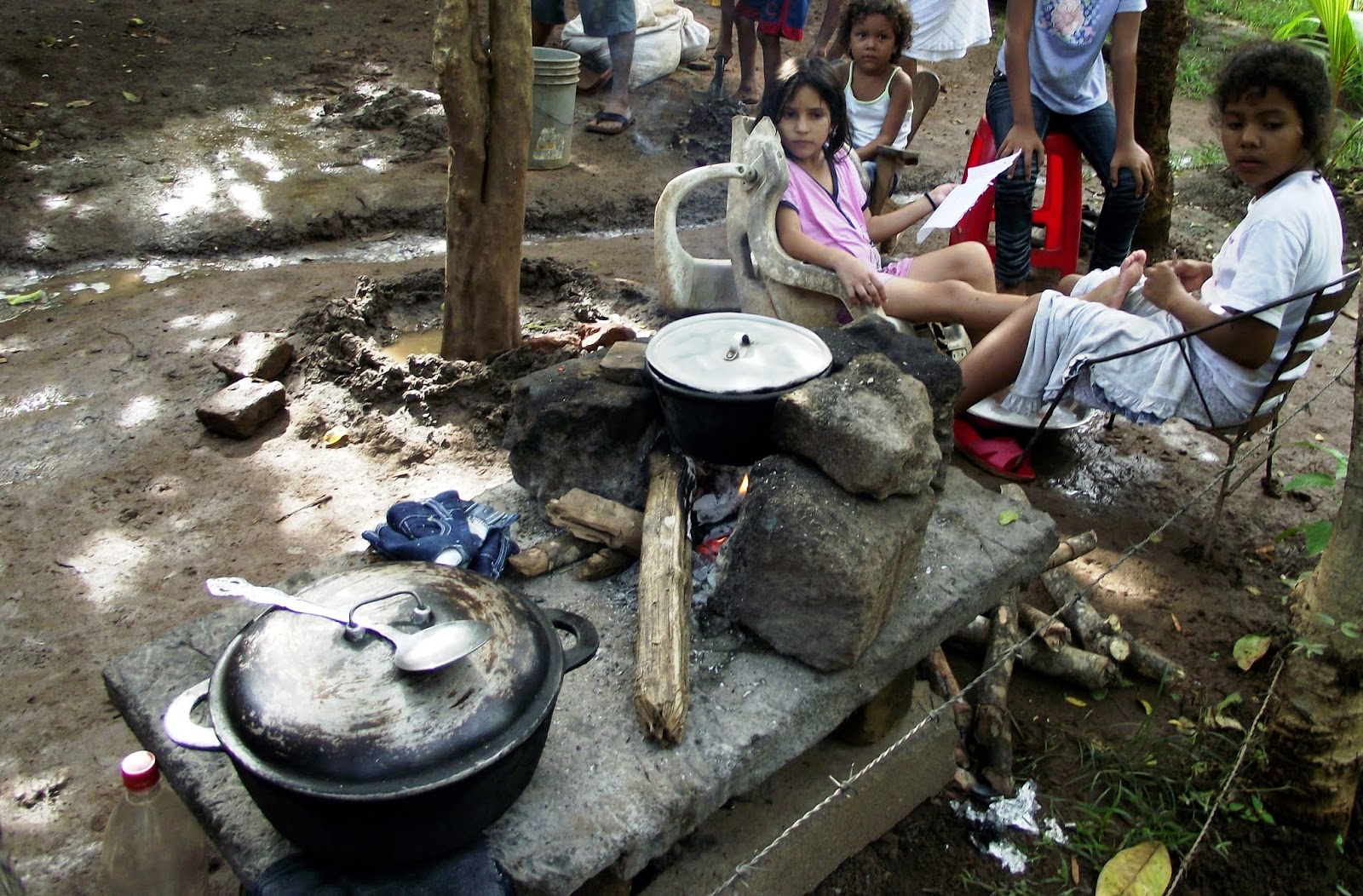
Last week for Future Friday, we posted a blog on wood cook stoves and how they contributes to deforestation and air pollution.  The air pollution is a serious health issue as most people would agree.  But also, the wood burning cook stoves…again not pot belly iron stoves, but stones and concrete making a fire pit in the house basically…pose many health concerns.


For example, babies and children under five years old damage their lungs and have a higher rate of asthma, breathing in smoke from the stoves that are not well ventilated. Of those children under 5 years of age who come to our clinic for treatment, 28% of them are treated for asthma.

6% of all our other patients are treated for asthma or other pulmonary problems.  We have older women with emphysema and with chronic pulmonary obstruction who have never smoked a cigarette in their lives…but have stood over wood burning cook stoves breathing wood smoke day-in and day-out for their whole lives.

Adding to the smoke, these stoves are dangerous, especially to children.  They are not protected very well, and as a result many children are burned and many very seriously.  Women get many burns cooking and many have discolorations of the skin from burns.

Sometimes a family, desperate to create a fire to cook their tortillas, rice and - if fortunate - beans, will burn other flammable trash, including plastic which is toxic.  Also, the smoke hurts the children’s and women’s eyes.

Our health clinic has rescue inhalers and maintenance inhalers* to help relieve and control asthma.  We have nebulizers**  in 27 homes scattered around the barrios and rural communities so that people can go and receive nebulizing treatments there, as well as in our clinic.


Taking a deep breath of clean air is a gift to someone struggling to breathe.  As someone who has been hospitalized because I could not get enough air in my lungs, wheezing and gasping for air made me feel like a fish flopping on a dock.  It is frightening.

To simply breathe.

-Kathleen
_____________________
*Rescue inhalers are fast-acting to relieve the symptoms of asthma.  Maintenance inhalers are slower acting and used daily to prevent and control the symptoms of asthma.  Inhalers cost $7 each, and prednisone and nebulizing medications cost $10 combined.
 **A machine that relieves breathing issues by turning liquid medicine into inhalable mist.

NOTE: If you are using the mobile version, click on "web version" to see the full blog with all the features including "subscribe to blog by email".  Please join us and also share on your social media.


Wednesday, November 20, 2019

At My Very Core

Once when I went to a therapist, he said to me “I think you need to get back to what you believe… where your core faith resides.”  Finding time to center one’s self, to reassert one’s motivations, and to acknowledge the greatness of a Higher Being is critical for me in order to stand on solid ground, and yet as I get older and more jaded, finding that time or that place is getting to be more and more difficult.

Many people go to church each Sunday to reaffirm what they believe.  To hear the word of God, to sing praises, to worship.  And each Sunday, many stand together and recite the Apostles Creed …

I believe in God, the Father Almighty, Creator of Heaven and earth;
and in Jesus Christ, His only Son Our Lord,
Who was conceived by the Holy Spirit, born of the Virgin Mary, 
suffered under Pontius Pilate, was crucified, died, and was buried.
He descended into Hell; the third day He rose again from the dead;
He ascended into Heaven, and sitteth at the right hand of God, the Father almighty; 
from thence He shall come to judge the living and the dead.
I believe in the Holy Spirit, the holy Catholic Church, the communion of saints, 
the forgiveness of sins, the resurrection of the body and life everlasting.  Amen


When standing beside Mama at her church in Rock Hill, SC, I say those words from memory, and because time has lapsed since I last said them, I pay more attention.

There is nothing in the Apostles Creed about how Jesus lived or what he taught.  It very much is a Christmas/Easter Creed…. born, suffered, dead, buried, raised.


What if Christians who stated their creed each week included

“...who was born… and brought in the Kingdom of Heaven.  
To live in peace.  To feed the hungry.  To free the prisoners.  
To love and pray for our enemies.  To clothe the naked.  
To preach good news to the poor.  To love one another.  To heal the sick.  
To welcome the outcasts.  To love the world… all of the world as His Father did.  
And as a result of his proclamation of this new kingdom 
he suffered under Pontius Pilot, was crucified, dead and buried…”


If Christians said that Sunday after Sunday, do you think we might act differently? 

-Kathleen


NOTE: If you are using the mobile version, click on "web version" to see the full blog with all the features including "subscribe to blog by email".  Please join us and also share on your social media.

Monday, November 18, 2019

POP! It works for the Poor!

With Paul, Becca, and the girls back home from their Northwestern speaking tour, it is nice to have the Community together again.  It is amazing how often one or more of us is away speaking or visiting family.

As a Community we worship each Monday evening which means praying for others and giving thanks for the good things that happened the week before.  We are different people of different backgrounds both religiously and in most ways…

We have now four Quakers, 1 Catholic, 1 agnostic, 1 Episcopalian, 1 Presbyterian, 2 ex-religion, and a baby baptized into the Community.  In our 40 years of Community life we have included a Muslim, Brethrens, a Jewish person who was an agnostic, a reformed Orthodox druid lapsed, an atheist, Methodists, Baptists, etc.  The one thing we all have had in common is lifting our brothers and sisters out of poverty.

JHCommunity 1993
Those of us who believe in a Higher Being trust that people living in poverty is not from design but by humanity’s sinfulness and greed.  We believe that there is a special place for the poor in the heart of the Divine.  This doctrine of the Preferential Option for the Poor was given voice by liberation theologians such as Gustavo GutiĆ©rrez*.

Paul Farmer**, anthropologist, infectious disease doctor and founder of Partners in Health, calls this doctrine of the Preferential Option for the Poor “POP”, his shortcut when trying to make a point.   I think POP not only serves as an acronym but is also quite appropriate…
POP!


  • Fireworks drawing our eyes upward and dazzling
  • A thunderclap from the heavens shaking our souls with its power
  • Lovingly calling on a father or a grandfather
  • The sound of a bottle cap’s removal, with a refreshing drink to ease the dryness in the throat
  • A bubble of greed surrounding the heart bursting, to free the heart to love


When we focus our lives around ending poverty then we can work together no matter the differences… when we focus on lifting people out of poverty then we shift our whole focus and maybe, just maybe, we will see the Divine in their faces.  POP!


-Kathleen

*https://en.wikipedia.org/wiki/Gustavo_Guti%C3%A9rrez
 **https://en.wikipedia.org/wiki/Paul_Farmer

Note: If you would like to give to the work of the CDCA, focusing on a Preferential Option for the Poor, give online here: