The Center for Development in Central America is a project of the Jubilee House Community (JHC-CDCA) a non-profit working with poor communities in Nicaragua to help them realize their own goals, rather than bringing in "ready-made solutions."
Managua’s main market – the Eastern market – is the largest in Central America, taking up more than 145 acres in the old city center. Each day 540,000 people shop there, and last Friday I was one of them. I had gone there to buy basic grains for the Genesis Spinning co-op.
In early July Genesis came to us and said that after nine months of waiting for their machinery to arrive, they were desperate...are desperate. Family members who have been supporting them economically are now giving ultimatums: “If the machinery doesn’t come soon, I can't keep giving you money.” Things are tough at home and their spirits are low. They asked us for a donation of basic grains to distribute to cooperative members every two weeks until the machinery arrives.
I heard their request and knew that they were right. We had to find a way to get them food. But we have been having a tight year financially, and right now we are in the middle of giving credits to organic cotton farmers for this year’s planting (450 acres!). We didn’t know how we could give Genesis cooperative additional aid on top of the continued financing of construction and legal costs.
But it had to be done. So we thought about it, prayed about it, and started making phone calls. In mid-July we received a donation to give the Genesis co-op basic grains – 300 lbs of rice, 200 lbs of beans, 200 lbs of sugar and 2 buckets of cooking oil – every fortnight. There are some really good people in this world.
This trip to Managua’s market is our third, and I’ve come with Erwin and Natalia of the Genesis co-op. While Erwin watches the car (there’s a robbery every 7 minutes in the Market), Natalia walks up the line of guys selling beans and corn out of the back of big trucks, ignoring their shouts of “this one is soft, just like you want them,” accepting their offered beans to chew and spit out in her test for texture, reaching down inside the bags to see how much field trash and rocks are mixed in.
I follow along behind her, dutifully chewing and spitting out beans, frowning when she says “too hard, right?” and nodding when she says “too soft, right? These ones will go bad too fast.” She finally finds a bean she likes and follows its owner over to his pile of sacks. He empties one of his sacks into our sack and when Natalia asks him to weigh it he says “oh, it’s all there” and she replies, “let’s just go see.” He takes us over to the shop next door where he pays its owner C$5 for the privilege of using his scale. He hoists the sack up on a metal hook and hangs it from the scale. 80 pounds. “See?” says Natalia and he hurries off to bring us another 20 pounds of beans to fill the sack. Once our two sacks weigh out at 100 pounds each, he hoists the bags up on his back and carries them over to our car.
Natalia’s been sent by the co-op to guarantee the quality of the beans, and rightly so. The first time I went to the market to buy beans, I went with a man – César, our director of projects– and we made it obvious that between a gringa and a man we didn’t know beans. We had bought the cheaper “frijol chile” and not only was one sack 18 pounds underweight, but when the women tried to cook them, the beans were still hard after five hours on the fire. “I left my daughter at home to cook these,” exclaimed Sara, “can you imagine! We’ll spend more on firewood than we would have on better beans!” This time Natalia – who is in her fifties and spends her early mornings and evenings pounding tortillas to sell – has selected a nice soft red bean that cooks up nicely and also saved us fifteen dollars on the cost. And I think I might even know the difference between a good bean and a bad bean. Not a bad day’s work. – Becca
“Measurable results” are my nemesis.In fact, they are the reason that I haven’t posted a new blog in a month: I’ve been too busy writing bureaucratic reports that try to show what “measurable results” our projects have had.
Insistence on measurable results hinders actual development while also frustrating the heck out of me.In our work in Nicaragua, we deal with various “international development” institutions that show us the damage created by this ridiculous insistence on measurable results.While I don’t want to paint all development/funding/cooperation institutions with the same brush, I think it is fair to say that the general trend now is more pencil-pushing and less actual progress.Let me give you quick view of how this works.
When an organization like ours – relatively small, relatively small budget and “on the ground” – writes a project proposal to one of the above-mentioned institutions, it must always include particular “Objectives” and “Indicators” and note the way that these results will be verified.Invariably the methods of verification are paperwork: monthly, quarterly, semi-annual and annual reports both narrative and financial, plus internal and external evaluations.The external evaluations are always done by an outside contractor who makes an obscene amount of money to read everyone else’s reports and possibly make a site visit and do an interview or two.
Once a project is approved those of us who do tangible work to try to make the project actually happen, while those who are assigned to the project at the funding institution begin requesting paperwork from us.These folks are usually called “specialists” and their job is essentially pushing paper and covering their own behinds and their bosses’ to make sure that, on the off chance someone further up the bureaucratic food chain actually reads the reports, they have dotted all the I’s and crossed all the T’s.
So much focus on paperwork causes the actual project to suffer – it boils down to no one caring whether or not you actually accomplish anything, but only that you wrote it all down correctly and turned it in on time.For example, we recently had a functionary tell us that we couldn’t spend money on what we most needed because – and I could not make this up if I tried – a previous functionary had not “put a check mark next to number 20 on page 6” which would have indicated a future intention to spend the money in that manner.
Amid this sea of reports, what gets lost is humanity.Where do people fit in to measurable results?They stop being Martha and Diana and Pablo with faces and names and children and instead become “project beneficiaries.”And the push for measurable results means that those of us who serve as the conduit trying to get institutional money to the places it’s most needed wind up doing what the people with the money “require” of us instead of what the poor really need.That’s not right.
People who are a lot smarter than me – and there are a gracious plenty of those – have given this subject a lot more thought (and a lot fewer sarcastic remarks) than me and have come to the same conclusion: measurable results in factimpede real results.Nicaraguan economist Carlos Pacheco – also intimately familiar with the dark world of results-based projects – says that development should be process-based, as opposed to results-based.He says that in fact we should not talk about “Projects” – which arbitrarily end whether or not there is a need to continue the work – but rather we should talk about Process. And, as he points out, processes are very hard to measure, which funding institutions hate, but they ought to just get over that if what they want is to contribute to sustainable development.Some of the best advances happen internally, and that’s simply something that can’t be measured.
Unfortunately, I don’t have a lot of pull in these institutions to convince them that they’re headed the wrong way.Fortunately, the CDCA has a lot of supporters who don’t need measurable results – individuals, groups and organizations that simply send in donations saying “Y’all do great work, use this to keep it up!”On this year’s IRS tax form that we have to fill out as a non-profit, our organization is 99.61% publicly supported…that is one number for which I feel immeasurably grateful.– Becca
If you’d like to become one of those supporters who help us do more work and fewer reports, go to http://www.jhc-cdca.org/credit.html to donate online or send a donation by check.
Thanks to Kelly Doering of Stick People Productions for the photo of Becca, Mike & Rosa speaking truth to bureaucracy.Thanks to Greg Ewert for the photo of Genesis in a development process that can’t be measured.Thanks to Kathy Floerke for a photo of her overflowing file cabinet.
For the first time ever, it’s been my turn to cook dinner for our delegation this week. Throughout the year we receive 10-15 delegations – groups from churches and universities mostly – who stay in our dorm and work in our projects. The
-->se groups or “brigades” are usually here for a week or 10 days and bring between 15 and 25 people. While Josefa and Carmen make them delicious Nicaraguan breakfasts and lunches, we make them gringo style food for dinner…let me amend that. Kathleen makes them gringo style food for dinner.
Although others of us often pitch in, Kathleen is the true chef among us, regularly cooking meals for 45 without breaking a sweat. And let me add that these aren’t just any old meals…they are meals that you continue to dream of months after you’ve left…I think we have more than one delegate who annually makes a 6,000 mile trek not for their love of Nicaragua, but for their love of Kathleen’s spaghetti!
Kathleen honed her cooking skills while running homeless shelters with Mike and Sarah in the early days of the Jubilee House Community. Since coming to Nicaragua she’s been the main dinner cook for our delegations for 16 years, cooking not only for the 25 brigadistas but also our permanent community members and long-term volunteers, which is often a group totaling 45 hungry mouths!
But this month, while we have a Bucknell Brigade Alumni delegation with us, Kathleen is visiting family in the US. Before she left, Kathleen spent hours training Nubia – the sous chef when we have groups here – how to prepare and cook six different meals by herself. Then Nubia – after six years of waiting – was finally scheduled for back surgery…during this delegation, of course! She is actually getting three spinal blocks done to try to correct a problem with her vertebrae. The first one was successfully done in June, and the second one was scheduled for today. So luckily, Nubia was able to cook the first four dinners and Carmen and Josefa and I are bravely taking on the second two dinners.
I regularly help Kathleen with shopping and often make meals for 15, so the work wasn’t a total surprise, but I have to admit that this week I’ve come to really appreciate Kathleen for all the hard work she quietly gets done without fuss: figuring out menus and what food to buy for each meal (took me an hour!), putting together shopping lists from 6 different people (took me nearly another hour!), purchases at the farmer’s market (6 watermelons, 100 tomatoes, 75 limes, 210 eggs, 100 oranges, 10 pineapples, 20 plantains…) and the grocery store (50 chicken drumsticks, 20 pounds of cheese, 24 bathroom deodorizers, 36 rolls of toilet paper…), organizing which food gets eaten when (Josefa has saved me three times by catching things I didn’t manage to buy at the right time!), then mixing vats of fruit salad and egg salad and chicken salad (okay, vegetarian me didn’t taste that one)…Phew! It’s hard work. And at the end I taste the food and it’s pretty good, but it’s just lacking that certain something…Kathleen. It must be her love of food and the ever-present hostess in her that gives her food that special flavor, and we’ll sure be glad to have her back!
In lieu of Kathleen actually being here to whip us up something wonderful, I’m including two of our favorite recipes from Kathleen’s cookbook, Grits Greens and Gallo Pinto. You can request your own copy of the book when you make a $35 donation to the CDCA. Email sarah@jhc-cdca.orgBuen provecho! -- Becca
Spaghetti Sauce
Serves 6-8
Brown and drain:
1 ½ lb. lean hamburger
Add and sauté:
2 onions, chopped
4-5 garlic cloves, minced
When onions begin to change color, add and lightly fry:
3-4 T. paprika
2-3 t. oregano
2-3 bay leaves
1 T. black pepper
Salt to taste
Add:
18 oz. tomato paste
7 ½ c. water
Bring to a boil. Lower heat and simmer for 3-4 hours, stirring every 30 minutes. Taste after two hours and adjust seasonings.
Tip:
·The secret is in the paprika; my mother does not add oregano or bay leaves. If you don’t want to measure, then shake paprika until it lightly coats the meat mixture so that it looks red. Then shake pepper over the paprika so that you still see red showing through. Then add salt.
·Use the tomato paste can to measure water (you need 3 cans of water for 1 can of paste). Take the spatula or spoon and stir up the paste sticking to the sides of the can; by the third can of water you will have gotten all the paste.
·Make lots, and freeze for other recipes or for a quick spaghetti supper. It freezes really well.
Meatless Spaghetti Sauce:
Sauté:
Onions and garlic
In: Olive oil
Proceed with recipe. After the tomato paste and water are in, then add:
2 c. chopped tomatoes
1 c. chopped green peppers
Becca’s note: Kathleen now often makes us a vegetarian sauce thickened using TVP or cooked garbanzo beans and both are super tasty. For an easier version add whole black olives.
Potato, Tomato & Egg Casserole
Serves 6-8
350°
25-30 minutes
Bring to a boil (in same pan):
2 lbs potatoes
10 eggs
Boil for 2 minutes. Cover and turn off heat. Let sit for an hour. Peel eggs. In a 9” x 13” baking dish, spread:
2 T. olive oil
Slice potatoes 1” thick and layer in baking dish. Sprinkle on potatoes:
Salt and pepper to taste
Slice ½” thick:
2 large tomatoes
And layer on potatoes. Sprinkle with:
Salt and pepper to taste
2 t. basil
Layer on tomatoes:
1 c. grated cheese (mozzarella is best)
In a bowl, chop boiled eggs and add:
2-3 T. olive oil
¼ c. parmesan cheese
¼ - ½ c. fresh parsely, chopped
Mix well and top the casserole with egg mixture. Bake 350° for 25-30 minutes until eggs begin to turn golden and casserole bubbles.
Tip:
·I use a pastry cutter to chop the eggs into small pieces.
Options:
·Use oregano if you don’t have basil
·Use dry parsley flakes if you don’t have fresh parsley
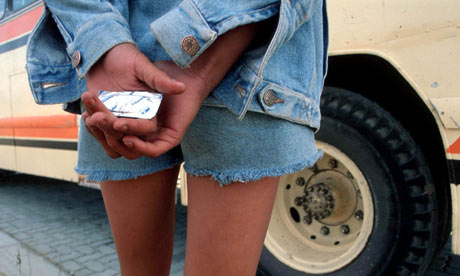
Last week I had the opportunity to listen to a talk about HIV/AIDS in Nicaragua given by Walter López of the Managua-based Fundación Xochiquetzal, an organization working with those living with the disease and preventing the spread of HIV/AIDS.He gave a good picture of the disease in Nicaragua, how it is spreading and why.Walter’s statistical information came from the Nicaraguan Ministry of Health (MINSA) numbers on reported cases of HIV/AIDS for the year 2009 (most recent data available).Walter noted that MINSA is the only place where patients can get retroviral drugs in Nicaragua.Other institutions can really only prevent and treat secondary illnesses associated with HIV/AIDS.
Cases in Nicaragua: In 2009 there were a total of 721 cases of HIV/AIDS and there were 71 new cases reported, for a total of 792 reported cases of HIV/AIDS.In 2009 there were 74 reported AIDS patients who passed away.Of course, those numbers are only for reported cases, where people actually got tested.While getting tested in Nicaragua is becoming easier, it’s still not an easy process.
How does testing in Nicaragua work?In 2009 there were a total of 112,207 HIV tests done in Nicaragua.Almost half of those were administered to pregnant women through MINSA’s prenatal program.HIV tests in public hospitals are free, but not all hospitals and health centers can do the test.For example, the MINSA neighborhood health centers in Ciudad Sandino don’t have the reactants to do the tests, so they will send patients to the Hospitalito here, but even there they are most likely to refer patients into the Central Hospital in Managua to be tested.All of is a lot of hassle and expense, which would be enough to discourage even the very determined.Private foundations like the Xochiquetzal offer testing, but there is a cost: at their clinic the test is C$200 ($10).They and other groups do carry out campaigns where they will go into neighborhoods and rural departments and test people for free.The quick test takes about 25 minutes and those being tested receive confidential counseling sessions before and after.
High risk ages:The population at highest risk in Nicaragua to contract HIV/AIDS are those between 15 and 35 years of age, with the very highest incidence between the ages of 25-29.Walter points out that this is the age when many young people are exploring their sexuality with less concern for protecting themselves.This is also the age when people are likely to have children and also are economically active (working).The more that this age range of Nicaraguans is affected, the more that HIV/AIDS will begin to affect the productivity of the country as its working population is hit by the disease.
High risk occupations:The three highest risk occupation groups are: Housewives (97 total cases reported), Manual laborers (91 total cases reported), and students (35 total cases reported).Interestingly, there are only 7 sex workers reported to be HIV positive while there are 13 “professionals” – people with university degrees.Walter explains that there is a stigma against sex workers, but they are one of the populations who are most informed about HIV/AIDS transmission, acknowledge that they are at risk and use condoms.They are also a population that gets tested more frequently than others.
Feminization of the disease:The gender breakdown of those living with HIV in 2009 in Nicaragua was 63% male, 35% female and 2% unknown.The incidence of HIV in women is rising rapidly, what is commonly known as the “feminization of HIV/AIDS.”Housewives are the group with the fastest rising rates of HIV/AIDS.Walter explains the reasons behind this: “Housewives are economically dependent on a man, and so they feel that they cannot insist that he use a condom.If they do insist, the first thing their husband will say is ‘Oh, you must be sleeping with someone else’ or ‘Don’t you trust me?’Many husbands will hit their wives for insisting that he use a condom, and so in fear of violent retribution and because of their position of dependence, housewives will not insist that their husbands wear a condom.”
Worldwide, battered women are more likely to have HIV/AIDS or to contract it than other women.Walter explains that where the Xochiquetzal Foundation has done investigations in a neighborhood about who has been tested, the women who do not work outside the home are most likely to answer no, maybe a total of 2% have been tested.And invariably when asked when they got tested they say “When I got pregnant with my last child.”Walter also points out that women tend to put their own health aside to look after their families, and so it is unlikely that they will go to get tested just to make sure they are okay.
HIV positive & pregnant: MINSA has a policy of testing pregnant mothers who go in for pre-natal exams.They also have a policy that if a woman arrives at a hospital to give birth and cannot show that she has tested negatively for HIV then they will perform a cesarean, and not allow a vaginal birth in order to not risk possible infection of the baby.
In 2009 there were 64 pregnant women detected to be HIV positive through their pre-natal testing.There were 31 newborn babies who tested HIV positive last year.Life expectancy for babies born with HIV/AIDS in Nicaragua is between 10 and 20 years, depending on the quality of life that those children have.If their families have enough money to feed them well and get them the medical attention they need, then they are likely to live longer and better lives.
Where is Nicaragua most at risk?The areas of Nicaragua where the virus is found most are parts of the country that have ports or border crossings.Chinandega, home to Nicaragua’s largest port, Corinto, has 34.3% of all reported cases of HIV/AIDS.Matagalpa has the lowest incidence which is at least in part due to the fact that it is such a rural area that fewer people can get to the health centers where they can be tested.
Honduras and Costa Rica, the two countries that share borders with Nicaragua, have the highest incidences of HIV/AIDS in Central America, and Nicaragua has one of the lowest.The virus first came to Central America in the 1980s to Honduras when thousands of US troops were stationed there.It arrived in Costa Rica through a boom in tourism (including sex tourism) in Costa Rica, through US tourists.Does Nicaragua actually have a lower rate of HIV/AIDS that its two border countries?Unless a larger percentage of the population can get tested, it’s hard to tell.
Quick testsare making it much easier to be tested in Nicaragua, but they are expensive.We would love to have tests donated to our Nueva Vida Clinic and to help organizations like Xochiquetzal get free tests so that we can test people free of charge in 25 minutes or less.If you can help get these tests donated for Nicaragua, please contact us at jhc@jhc-cdca.org -- Becca
Paul and Becca will be speaking in the Northwest in September and October about the CDCA’s work! Below is our schedule, if you’re in the area, please come hear us speak! If you are interested in organizing a presentation for us, will still have lots of spaces availabe! If you are able to organize a talk, loan us a van for travel or have questions, please write to: becca@jhc-cdca.org. We will be traveling with a 20-25 minute power point presentation fair trade organic coffee, Slightly Twisted Spoons and Nicaraguan crafts for sale.
CDCA Fall Northwest Tentative Speaking Schedule 2010
Sunday 5 September 9:30 AM: Plymouth Congregational Church of Seattle PM: SEATTLE available Monday 6 September AM: Home of Sarah Wildflower 4 PM: Home of Melinda and Tim Frostad, Kent, WA Tuesday 7 September AM: SEATTLE available 7 PM: Sarah Moon Wednesday 8 September 7 PM: Moreau Center, University of Portland Thursday 9 September AM: Home of Audrey Crist & Darren Kenworthy PM: Home of Borg Norum & Jennifer Noll Friday 10 September 12:00 PM Southwest Portland Rotary Club 5:30 PM shopping, 7 PM Presentation Multnomah Monthly Meeting Saturday 11 September AM: Home of Shann & Rachel Mortimer PM: Home of Jean Lea Sunday 12 September PM: Home of Jessi Skall Scofield Monday 13 September AM: PORTLAND available 6 PM: Portland Metropolitan Rotary Club Tuesday 14 September AM: PORTLAND available PM: PORTLAND available Wednesday 15 September AM: PORTLAND available PM: WHIDBEY ISLAND available Thursday 16 September AM: United Methodist Women's Lunch, Langley, WA PM: WHIDBEY ISLAND available Friday 17 September AM: WHIDBEY ISLAND available PM: LOPEZ ISLAND Saturday 18 September LOPEZ ISLAND Sunday 19 September LOPEZ ISLAND Monday 20 September AM: SEATTLE available PM: SEATTLE Home of Arwen Dewey Tuesday 21 September AM: University of Washington, Cassie & Brian Iutzi PM: Jen Tee Wednesday 22 September AM: SEATTLE available PM: Home of Chrastil-Ingebritsen Family Thursday 23 September 12:00 PM: Seattle University 6:30 PM: Pangea Giving Friday 24 September AM: SEATTLE available PM: Quarterly Meeting (Quakers), Ellensburg, WA Saturday 25 September Quarterly Meeting (Quakers), Ellensburg, WA Sunday 26 September Quarterly Meeting (Quakers), Ellensburg, WA Thursday 14 October 12 PM Eagle-Garden City Rotary Club PM: BOISE available Friday 15 October AM: BOISE available PM: BOISE available