Translate

Showing posts with label COVID-19. Show all posts

Tuesday, March 8, 2022

Help Just Around the Corner?

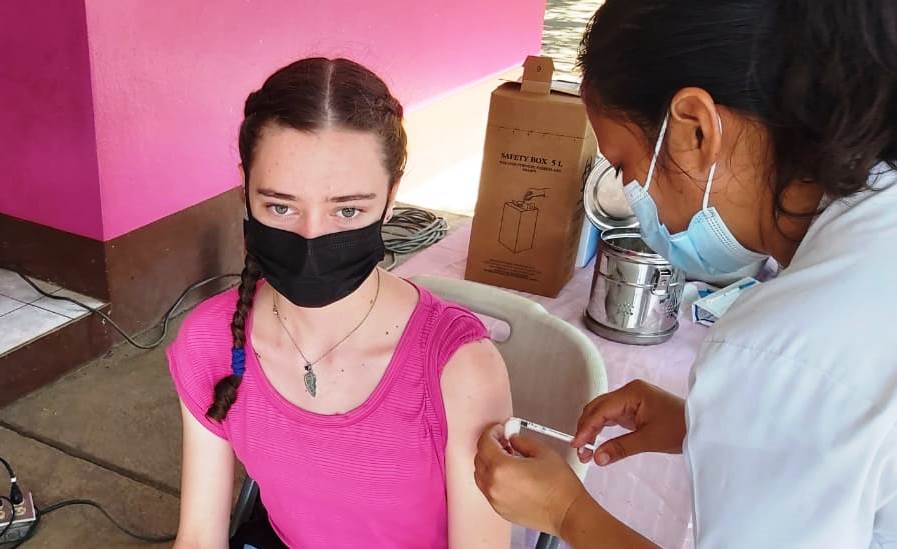
The Nueva Vida Clinic Health Promoter Project went on hold during COVID outbreaks. Now that 86% of Nicaraguans have at least one dose of a COVID vaccine and 64% are fully vaccinated, we have decided to open back up the Health Promoter Project.


What is the Health Promoter Project?


We have 20 promoters in this project. They open their homes to the community around them in order to serve people who need immediate health care…here are some examples:


  • Let’s call the first person in need “Martha”. Martha is feeling woozy and she has hypertension and type 2 diabetes. It's nighttime and going to the hospital is a long 45-minute walk, or if a bus comes by it is a 20-minute ride. Plus, the neighborhood is dangerous after dark. So Martha opts to go to the promoter’s home only a few blocks away. The promoter “Ana” asks her questions, takes her blood pressure, temperature, and tests her blood glucose…all of which Ana has been trained to do by the medical staff in the clinic. These tests will help Ana determine what might be going on. Ana then talks to Martha to help her to figure out if she can wait until morning when our clinic is open, or take the meds that Martha already, has or go straight to the hospital. 
  • Our second person is "Josue"…nine years old and he has suffered from asthma since he was three. It is 2 AM, and he wakes his mom up with his wheezing. She takes him to the promoter in their area, "Miguel", who is trained to triage asthma. He listens and watches Josue after giving him two puffs of a rescue inhaler. Miguel talks to the mother and Josue, trying to create an atmosphere of calm, all the while watching how Josue is breathing. After 10 minutes, Josue is breathing easier and Miguel gives the mom the inhaler and instructs her to take Josue to the clinic in the morning. 
  • Our third person is "Alejandro", who while chopping wood in the early morning with his machete slices his arm as the machete slips. His wife helps him get to "Teresa'' for first aid. Teresa is the promoter on their block and looked after Alejandro’s wife when she was pregnant with their third child. Teresa cleans the wound and pulls the skin together as well as she can with the supplies that our clinic gave her. She wraps it, but tells Alejandro he has to go to the hospital to get stitches, as the wound is too deep and too long for it to heal well on its own. 

  • Our fourth person is "Lisa", who is five years old. She has come home early from kindergarten; her cheek is swollen and she is in tears. “Enrique”, Lisa’s older brothe,brought her home because their mom is at work. Grandma is bed-ridden. Grandma tells Enrique to take Lisa to see his uncle, "Tomas", who is a health promoter. Tomas was trained by dental volunteers as well as by our medical staff. He looks at Lisa and examines her mouth. She has a rotten tooth. The clinic is open and he takes Lisa to our dentist who puts her on an antibiotic and a pain reliever before giving Tomas an appointment for Lisa to return for an extraction.


These are some of the many ways that the health promoters respond from their own homes.


Outside their homes, they keep a pulse on changing community needs, and they let us know what is going on. They help us keep an eye on patients who are at a higher risk than others.


They also do home visits with Elizabeth, our general physician, and Emir, who oversees the Health Promoter Program. Last week, while on their home visits, they found a diabetic patient of ours whose blood glucose was over 500…that is five times what it should have been. She had drunk some milk with a banana blended in it. Elizabeth talked with the woman, treated her to bring down the glucose level, and the promoter then knew to return for another check-up visit on this patient soon.


In their walk-abouts in the Nueva Vida community, another patient was a pregnant mother who it turns out had actually miscarried and was doing poor physically. Elizabeth sent her to the hospital to make sure the uterus was completely expelled. The promoter then knew to follow-up with the grieving mother.


This Health Promoter Program is vital. It is the most cost-effective program that we provide in the clinic. These promoters learn, share their knowledge, open their homes, visit others in their beds, and provide services at night and on the weekends that no one else provides.


Besides monthly classes on various topics, we provide the promoters with first aid kits containing needed supplies and a small stipend each month. The Nueva Vida Clinic expects to see 9,600 patients this year, and the total cost of the Health Promoter Program is $15,380. Will you help?


Sponsor one month’s stipend for a health promoter - $15

Sponsor 20 patients - $25

Sponsor one month of supplies for a first aid kit - $50

Donate now: https://donatenow.networkforgood.org/jhc-cdca


Thank you!
- Kathleen

NOTE: If you are reading this blog using the mobile version, click on "web version" to see the full blog with all the features including "subscribe to blog by email".  
Please join us and also share on your social media.
Website: jhc-cdca.org

Tuesday, November 23, 2021

Under Pressure

[Espanol abajo]


In 2015, every time our son, Coury, would walk into the hospital and look at my vitals, he would say, “I wish I had gotten your blood pressure and not Papaw's”.  I have always had low blood pressure my whole life, until later that same year…


Starting that July and before Thanksgiving, our family had a year from hell...I almost died; my dad did die; then my brother died; I broke my rib in a car accident; and my mother had a stroke.  Now I was home here in Nicaragua and we went to see an immunologist because I now had no spleen…(the me almost dying part).


Before the appointment, I had just found out that Mama was taking a turn for the worse.  We met with this baby who “claimed” to have gone to medical school (OK! Yes! I have become one of THOSE people) who first took my blood pressure.  Then this child who had just been potty trained had the audacity to announce I had high blood pressure.  How dare he! 


Needless to say, my blood pressure numbers never did go back down in his office.  I have since learned that when I get stressed or upset, my blood pressure spikes.


Why am I sharing this with you?


I had some really stressful months in 2015; can you imagine what my blood pressure would be if I lived in Nueva Vida:

  • Wondering if we have enough to feed the children tomorrow?

  • Wondering if we have enough to buy wood to cook what food we might have to feed the children tomorrow?

  • Wondering what will happen to our mother as she grows more and more frail?

  • Wondering if the gangs are going to bother my family?

  • Wondering if someone is going to get sick in the household maybe with COVID?


My blood pressure would be a million over a million!  It is a miracle that EVERY patient we see in our Nueva Vida Health Clinic does not have hypertension.


In 2018, twenty-five percent of the deaths in Nicaragua were due to cardiovascular disease.  Most cardiovascular disease and strokes are due to hypertension.


Nicaragua has the highest CVD mortality rate in Central America.  Managua, the capital of Nicaragua, has the highest prevalence of hypertension among various other Central‐American capitals with men having higher blood pressures than women.  Women have more awareness of the issue of hypertension.


The Ministry of Health is doing a much better job than past administrations did of identifying and getting medicine to people with hypertension, but with sanctions imposed and an embargo threatened, who knows the levels of suffering that are on the rise? More stress...higher blood pressure….more deaths..


In our clinic we commit to providing care and medicine monthly to 140 plus patients with NCD.  Hypertension is a large percentage. 


We wish we could provide this level of care for all the patients but we do not have the funds.  At least those 140 patients can rest easier at night knowing they will have the medicines they need.

- Kathleen


[English above]


En 2015, cada vez que nuestro hijo Coury entraba al hospital y miraba mis signos vitales, decía: "Ojalá hubiera heredado tu presión arterial y no la de Papaw.” Siempre he tenido la presión arterial baja toda mi vida, hasta más tarde ese mismo año ...


A partir de ese mes de julio y antes del Día de Acción de Gracias, nuestra familia tuvo un año de pesadilla ... Casi me muero; mi papá murió; luego murió mi hermano; Me rompí una costilla en un accidente de carro; y mi madre sufrió un derrame cerebral. Ahora estaba en casa aquí en Nicaragua y fuimos a ver a un inmunólogo porque ya no tenía bazo…(a raíz del incidente donde casi me muero).


Antes de la cita, acababa de enterarme de que mamá estaba empeorando. Nos reunimos con este doctor bebé que “afirmó” haber ido a la escuela de medicina (¡OK! ¡Sí! Me he convertido en una de ESAS personas) que primero me tomó la presión arterial. Entonces, este niño que acababa de aprender a ir al baño tuvo la audacia de anunciar que tenía la presión arterial alta. ¡Como se atreve!


No hace falta decir que mis cifras de presión arterial nunca volvieron a bajar en su oficina. Desde entonces he aprendido que cuando me estreso o me molesto, mi presión arterial se dispara.


¿Por qué estoy compartiendo esto contigo?


Tuve algunos meses realmente estresantes en 2015, ¿se imaginan cuál sería mi presión arterial si viviera en Nueva Vida?

  • ¿Se pregunta si tendremos suficiente para alimentar a los niños mañana?

  • ¿Se pregunta si tenemos suficiente para comprar leña para cocinar cualquiera comida que tendremos para alimentar a los niños mañana?

  • ¿Se pregunta qué le pasará a nuestra madre a medida que se vuelva cada vez más frágil?

  • ¿Me pregunto si las pandillas van a molestar a mi familia?

  • ¿Se pregunta si alguien se va a enfermar en el hogar tal vez con COVID?


¡Mi presión arterial sería de un millón sobre un millón! Es un milagro que TODOS los pacientes que vemos en nuestra Clínica Nueva Vida no tengan hipertensión.


En 2018, el veinticinco por ciento de las muertes en Nicaragua se debieron a enfermedades cardiovasculares. La mayoría de las enfermedades cardiovasculares y los accidentes cerebrovasculares se deben a la hipertensión.


Nicaragua tiene la tasa de mortalidad por ECV más alta de Centroamérica. Managua, la capital de Nicaragua, tiene la mayor prevalencia de hipertensión entre varias otras capitales centroamericanas, donde los hombres tienen presión arterial más alta que las mujeres. Las mujeres tienen más conciencia sobre el tema de la hipertensión.


El Ministerio de Salud está haciendo un trabajo mucho mejor que el de las administraciones anteriores en la entrega de medicamentos a las personas con hipertensión, pero con sanciones impuestas y un embargo amenazado, ¿quién sabe los niveles de sufrimiento que están aumentando? Más estrés ... presión arterial más alta ... más muertes ...


En nuestra clínica nos comprometemos a brindar atención y medicamentos mensualmente a más de 140 pacientes con enfermedades crónicas, la hipertensión es un gran porcentaje.


Deseamos poder brindar este nivel de atención a todos los pacientes, pero no tenemos los fondos. Al menos esos 140 pacientes pueden descansar mejor por la noche sabiendo que tendrán los medicamentos que necesitan.

- Kathleen

NOTE: If you are reading this blog using the mobile version, click on "web version" to see the full blog with all the features including "subscribe to blog by email".  

Please join us and also share on your social media.

Donate here to the ongoing work of the CDCA with the poor in Nicaragua:
https://donatenow.networkforgood.org/jhc-cdca 

Sunday, October 31, 2021

Nicaragua's Exemplary Vaccination Campaign

 [Español abajo] 

The gray light of predawn was just fading when I arrived at the health center with my two daughters, and I was surprised to see we were the first ones there. It was Monday, October 25th, the first day that COVID vaccines for 2 - 29 year olds would be available in Nicaragua, and I had expected there to be a line already. I had recently been vaccinated with the over-30s age group and had stood in line at a hospital with thousands of people for several hours. Our AstraZeneca vaccines were donated through the COVAX program and due to developed countries hoarding vaccines, in Nicaragua it had only been available at major hospitals…until this week.


So where were all the waiting people now? In contrast to the earlier vaccines, the vaccines for 2 - 29 year olds are from Cuba and Russia and were shipped in batches of a million or more doses that don’t require storage in sub-zero temperatures, so the Ministry of Health made them available countrywide at 1,087 health centers simultaneously. My daughters may have been the first to arrive and get the COVID vaccine at our health center that day, but there was a steady stream of children and young people behind them and also at five other health centers in our city.

That first morning, Nicaragua vaccinated 93,438 people. By 7 PM Friday, Nicaragua had applied at least one dose of various donated COVID vaccines to 26% of the target 2 - 29 year-old population, 54% of pregnant women and 62% of over-30s. This is the equivalent of 43% of the total population, the majority of those vaccines applied in the past 6 weeks. This feat is not surprising given Nicaragua’s experience organizing annual vaccination campaigns and its 98% overall vaccination rate, but is still impressive for any country.

Yet, what were the international headlines this week? (If I sound angry here, it’s because I actually really am angry, so bear with me…) “Thousands of Nicaraguans cross border into Honduras to be vaccinated.” Articles claimed that lack of vaccines in Nicaragua was pushing hundreds of Nicaraguans each day to get vaccinated in Honduras.

It is true that Nicaraguans were going to Honduras to be vaccinated – paying hundreds of dollars for taxis and boatmen to take them undocumented across the river, only to have to pay again in a few weeks when they need their second dose – but given the massive success of this week’s vaccinations, it certainly wasn’t due to lack of vaccine in Nicaragua. So why were they risking an illegal crossing to receive Pfizer and Moderna vaccines?


1)      The same Monday that Nicaragua began vaccinating children and young people, the United  States announced that it would no longer allow foreigners to visit the U.S. unless they are vaccinated with U.S.-approved vaccines – which do not include Russian or Cuban-developed vaccines. Anyone with hopes of traveling to the U.S. (and with the resources to do so) zipped up to the border for a U.S.-approved shot.


2)      The Honduran government, undoubtedly acting on orders from the U.S., set aside 100,000 doses of the U.S.-donated Pfizer and Moderna vaccine at immigration posts along the border and announced their intention to vaccinate Nicaraguans, enticing people to make the trek.


3)      A certain population of Nicaraguans has been manipulated into thinking that the Russian and Cuban vaccines are unsafe. Contributing to this is the fact that, although Russia registered Sputnik V as the world’s first COVID-19 vaccine in August 2020, the World Health Organization still hasn’t approved it, and has no clear timeline to do so. This is particularly baffling considering Sputnik V is 91.6% effective – higher than AstraZeneca or J&J. The one-dose Sputnik Light currently being applied in Nicaragua is 70% effective against the Delta variant, 83% effective against infection, 94% effective against hospitalization and can be used as a booster for other vaccines.


Due to the 60 year economic embargo against it, Cuba has a long history of developing its own vaccines and the Soberana 2 and Abdala being applied in Nicaragua are 90% effective against COVID-19; 100% of Cuba’s eligible population has had at least one dose, and by the end of November Cuba expects to have 90% of its population fully vaccinated. In mid-September, Cuba began seeking approval from WHO for its vaccines, but has not yet made headway. All the Russian and Cuban vaccines can be stored in a regular refrigerator, making it more accessible for poorer countries without subzero storage conditions. Given clear evidence of the safety and effectiveness of the Russian and Cuban vaccines, the lack of emergency approval for them is perplexing… unless, of course, it’s politically motivated.


The U.S. manipulation machine is hard at work. Why? This coming Sunday, the 7th of November, Nicaragua is holding general elections…and the U.S. is knee-deep meddling in these elections in an attempt to keep the ruling FSLN party from winning: the U.S. ambassador to Nicaragua has been accused of interference with Nicaragua’s internal democratic process, and the U.S. has been announcing for months that the elections are a “sham.”


So this week’s “vaccine diplomacy” – cruelly manipulating a tragic pandemic for its own political ends – is just the latest in the U.S.’s last-ditch effort to keep Nicaraguans from choosing their own President. Another shameful example of this is that although the U.S. donated COVID vaccines to every other country in Central America months ago, it only donated vaccines to Nicaragua this week, 10 days out from the election.


To say that U.S. vaccine maneuverings are hypocritical is an understatement. Nicaragua’s vaccinations this week far surpass anything the giant to the north has been able to accomplish. In terms of population, Nicaragua’s vaccinations this past Monday morning would be the equivalent of the United States vaccinating 4.7 million people in a few hours. Nicaragua has gone from 8% of the population partially vaccinated to 43% in just six weeks; in comparison, after more than 10 months of plentiful free vaccines, only 66% of the U.S. population is even partially vaccinated, and 0% of its 2-11 year old children are vaccinated. It also bears mentioning that the U.S. has thrown out more than 15 million vaccine doses – enough to vaccinate every Nicaraguan twice – and is offering a third shot while people around the world still clamor for a first dose.


But that doesn’t stop the U.S. from manipulating Nicaraguans into crossing the border for a “better” vaccine.


The good news is that despite U.S. machinations, Nicaragua is proceeding with its vaccination campaign, expecting to have more than half of its target population vaccinated before next Sunday’s elections, and 90% before year’s end. Nicaragua is also the only country in Central America to begin producing COVID-19 vaccine, with doses of Russian COVI-VAC expected to be offered as booster shots to Nicaragua’s population in early 2022 and exports to Latin America to begin later in the year.   


And, despite the U.S.’s best efforts, Nicaraguans will participate in their exemplary democratic process next Sunday. It is expected that at least 75% of those over 16 will vote, about 3.35 million people. By comparison, in the U.S., less than 80% of eligible citizens are even registered to vote, and record voting in 2020 had just 66% of registered voters casting a ballot.


Nicaragua once again shows that it compares favorably to the U.S., both in COVID-19 vaccinations and democracy, earning the giant’s ire by continuing to be the threat of a good example. 

– Becca Mohally Renk, Jubilee House Community 


[English above] 

Apenas estaba amaneciendo cuando llegué al centro de salud con mis dos hijas, y me sorprendió ver que éramos las primeras en llegar. Era el lunes 25 de octubre, el primer día en que las vacunas COVID para niños de dos a 29 años estarían disponibles en Nicaragua, y esperaba que ya hubiera una fila. Recientemente me habían vacunado con el grupo de mayores de 30 años y había hecho fila en un hospital con miles de personas durante varias horas. Nuestras vacunas AstraZeneca fueron donadas a través del programa COVAX y debido a que los países desarrollados acaparan vacunas, en Nicaragua solo habían estado disponibles en los principales hospitales… hasta esta semana.

Entonces, ¿dónde estaban todas las personas que esperaban ahora? A diferencia de las vacunas anteriores, la vacuna para jóvenes de dos a 29 años es de Cuba y Rusia y se envió en lotes de un millón o más de dosis que no requieren almacenamiento en temperaturas bajo cero, por lo que el Ministerio de Salud las hizo disponible en todo el país en 1.087 centros de salud simultáneamente. Mis hijas eran las primeras en llegar y recibir la vacuna COVID en nuestro centro de salud ese día, pero había un flujo constante de niños y jóvenes detrás de ellas y también en los otros cinco centros de salud en nuestra ciudad.

Esa primera mañana del lunes, Nicaragua vacunó a 93,438 personas. A las 7 PM el viernes, Nicaragua había aplicado al menos una dosis de la vacuna COVID al 26% de la población objetivo de dos a 29 años, al 54% de las mujeres embarazadas y al 62% de los mayores de 30 años. Esto equivale al 43% de la población total, la mayoría de las vacunas aplicadas en las últimas 6 semanas. Esta hazaña no es sorprendente dada la experiencia de Nicaragua en la organización de jornadas anuales de vacunación y su tasa general de vacunación del 98%, pero sigue siendo impresionante para cualquier país.

Sin embargo, ¿cuáles fueron los titulares internacionales esta semana? (Si sueno enojado aquí, es porque en realidad estoy enojada, así que tengan paciencia conmigo ...) “Miles de nicaragüenses cruzan la frontera hacia Honduras para vacunarse.” Los artículos afirmaban que una “falta de vacunas” en Nicaragua estaba presionando a cientos de nicaragüenses por día a vacunarse en Honduras.

Es cierto que algunos nicaragüenses iban a vacunarse a Honduras -pagaban cientos de dólares por taxis y barqueros que los llevaran indocumentados al otro lado del río, solo para tener que volver a pagar en pocas semanas cuando necesiten su segunda dosis- pero dado el enorme éxito de las vacunas de esta semana, ciertamente no se debió a la falta de vacunas en Nicaragua. Entonces, ¿por qué se arriesgaban a cruzar ilegalmente las vacunas Pfizer y Moderna?

  1. El mismo lunes que Nicaragua comenzó a vacunar a niños y jóvenes, Estados Unidos anunció que ya no permitiría que los extranjeros visiten Estados Unidos a menos que estén vacunados con vacunas aprobadas por Estados Unidos, que no incluyen vacunas desarrolladas por Rusia o Cuba. Cualquiera con la esperanza de viajar a los EE. UU. (y los recursos para hacerlo) se fue a la frontera para una vacuna aprobada por EE. UU.

  2. El gobierno hondureño, actuando sin duda por órdenes de los EE. UU., reservó 100,000 dosis de la vacuna Pfizer y Moderna donada por los EE. UU. en los puestos de inmigración a lo largo de la frontera y anunció su intención de vacunar a los nicaragüenses, lo que incitó a la gente a hacer el viaje.

  3.  Cierta población de nicaragüenses ha sido manipulada para que piense que las vacunas rusa y cubana no son seguras. A esto contribuye el hecho de que, aunque Rusia registró el Sputnik V como la primera vacuna COVID-19 del mundo en agosto de 2020, la Organización Mundial de la Salud aún no la ha aprobado y no tiene un cronograma claro para hacerlo. Esto es particularmente desconcertante considerando que el Sputnik V tiene una efectividad del 91.6%, más alto que AstraZeneca o J&J. La dosis única de Sputnik Light que se aplica actualmente en Nicaragua es 70% efectiva contra la variante Delta, 83% efectiva contra infecciones, 94% efectiva contra hospitalización y puede usarse como refuerzo para otras vacunas.

    Debido al embargo económico de 60 años en su contra, Cuba tiene una larga historia de desarrollo de sus propias vacunas y la Soberana 2 y Abdala que se están aplicando en Nicaragua son 90% efectivas contra COVID-19; el 100% de la población elegible de Cuba ha recibido al menos una dosis, y para fines de noviembre Cuba espera tener el 90% de su población completamente vacunada. A mediados de septiembre, Cuba comenzó a buscar la aprobación de la OMS para sus vacunas, pero aún no ha avanzado. Todas las vacunas rusas y cubanas se pueden almacenar en un refrigerador normal, lo que lo hace más accesible para los países más pobres sin condiciones de almacenamiento bajo cero. Dada la evidencia clara de la seguridad y eficacia de las vacunas rusa y cubana, no se explica la falta de aprobación de emergencia ... a menos, por supuesto, que sea por motivos políticos.

La máquina de manipulación de Estados Unidos está trabajando duro. ¿Por qué? El próximo domingo 7 de noviembre Nicaragua celebrará elecciones generales ... y EE.UU. esta involucrado hasta las rodillas en estas elecciones en un intento de evitar que gane el partido gobernante FSLN: el embajador de EE.UU. en Nicaragua ha sido acusado de injerencia en la democracia interna de Nicaragua, y Estados Unidos ha estado anunciando durante meses que las elecciones son una "farsa."

Así que la "diplomacia de las vacunas" de esta semana - la manipulacion cruel de una trágica pandemia para sus propios fines políticos - es solo el último esfuerzo de Estados Unidos para evitar que los nicaragüenses elijan a su propio presidente. Otro ejemplo vergonzoso de esto es que, aunque Estados Unidos donó vacunas COVID a todos los demás países de Centroamérica hace meses, solo donó vacunas a Nicaragua esta semana, 10 días antes de las elecciones.

Decir que las maniobras estadounidenses de las vacunas son hipócritas es quedarse corto. Las vacunas de Nicaragua esta semana superan con todo lo que el gigante del norte ha podido lograr. En términos de población, las vacunaciones de Nicaragua el pasado lunes por la mañana equivaldrían a que Estados Unidos vacunara a 4,7 millones de personas en pocas horas. Nicaragua ha pasado del 8% de la población parcialmente vacunada al 43% en solo seis semanas; en comparación, después de más de 10 meses de abundantes vacunas gratuitas, solo el 66% de la población de EE. UU. está parcialmente vacunada, y el 0% de sus niños de 2 a 11 años están vacunados. También vale la pena mencionar que EE. UU. ha descartado más de 15 millones de dosis de vacunas, suficientes para vacunar a cada nicaragüense dos veces, y está ofertando una tercera vacuna, mientras hay mucha gente en el mundo que todavía clama por una primera dosis.

Pero eso no impide que Estados Unidos manipule a los nicaragüenses para que crucen la frontera en busca de una vacuna "mejor."

La buena noticia es que, a pesar de las maquinaciones de Estados Unidos, Nicaragua continúa con su jornada de vacunación, esperando vacunar a más de la mitad de su población objetivo antes de las elecciones del próximo domingo y al 90% antes de fin de año. Nicaragua es también el único país de América Central que comienza a producir la vacuna COVID-19, y se espera ofrecer la vacuna desarrollada en Rusia COVI-VAC a la población de Nicaragua a principios de 2022 y que las exportaciones a América Latina comiencen más adelante en el año.

Y, a pesar de los mejores esfuerzos de Estados Unidos, los nicaragüenses participarán en su ejemplar proceso democrático el próximo domingo. Se espera que voten al menos el 75% de los mayores de 16 años, unos 3,35 millones de personas. En comparación, en los EE. UU., Menos del 80% de los ciudadanos elegibles están incluso registrados para votar, y la votación récord en 2020 tuvo solo el 66% de los votantes registrados emitiendo su voto. 

Nicaragua demuestra una vez más que se compara favorablemente con Estados Unidos, tanto en vacunación COVID-19 como en democracia, ganándose la ira del gigante al seguir siendo la  amenaza de un buen ejemplo.

 - Becca Mohally Renk, Jubilee House Community 

NOTE: If you are reading this blog using the mobile version, click on "web version" to see the full blog with all the features including "subscribe to blog by email".  


Please join us and also share on your social media.

Donate here to the ongoing work of the CDCA with the poor in Nicaragua:

Tuesday, April 13, 2021

Vaccines and Sloppy Journalism

[Español abajo] (Saturday,10 April) As I write this, we, the Old Farts, are sitting at the women’s public hospital in Managua waiting to see if we keel over after getting our first COVID-19 vaccine. We are so excited and thrilled... not only did it go well... it was easy, organized, and safe. Every person attending us was friendly, kind, and very efficient.

A friend called us this morning and told us that the lines for vaccines had gone down and for us to head over and so we did.

First vaccination for the Old Farts

We got the AstraZeneca vaccine .The Nicaraguan government first vaccinated all the seriously at-risk people... People with kidney failure and on dialysis, people undergoing cancer treatments, etc. with the Sputnik vaccine.   Now the targeted population are those over 60 years of age.

Earlier in the week, I read an article in The Guardian that a friend had told me about and was appalled by what I read. The article certainly did not reflect what I have experienced in Nicaragua as we live here and have weathered the pandemic.

Nicaragua has had low numbers of cases... Why?
    1. Almost all businesses and government buildings that are enclosed require masks, alcohol for cleaning hands and shopping carts, and temperatures are taken before entering.
    2. The population of Nicaragua is young compared to... say... the U. S. A.
    3. Most houses are opened to the air. In regard to many other nations, most Nicaraguans do not have air conditioning.
    4. At the beginning of the pandemic, health workers went house to house explaining about the virus and how to protect yourself and family - they made nearly 5 million home visits.
    5. Despite what The Guardian said, there have not been mass demonstrations. The normally huge gathering in the Plaza on the 19th of July last year was instead broadcast virtually, and people were encouraged to celebrate at home with the slogan "every house is a Plaza."

Nicaragua has had limited testing like most of the world, but when Becca thought she might have COVID, she was tested. Read her blog about getting tested.

As in every country, there probably have been more deaths due to COVID-19 than are reported, but absolutely nothing like what The Guardian reported. Why do I think that? Because we run a health clinic that has its fingers on the pulse of a crowded and poverty-stricken community. Our Nueva Vida Clinic staff has only seen a few deaths that could have had the virus as a contributing factor along with diabetes, hypertension, and kidney failure.

The Center for Disease Control reports that deaths in the U.S. due to Covid-19 are likely to be 35% higher than has been reported.  Many people everywhere decide not to go get medical care.

So why is the Nicaraguan government getting such bad press regarding health care? 

Republican strategist Karl Rove includes in his playbook how to win using the strategy of attacking an opponent's strength. "It is simple: In a political environment where perception often trumps policy, mount early challenges to your opponent's strongest attributes to raise questions and create an alternative image in the minds of voters."

Among the many achievements of the Sandinista government over the last 15 years, health care - including the successful response to COVID - is one of this government's greatest achievements.  So why would a news media known for being left-leaning report such erroneous information?

Well, when I asked our Community members on our front porch, Becca said, "sloppy reporting.  They take information from someone that they trust and never check the sources."

When it comes to Nicaragua, this is what we see all the way from PBS/NPR to Democracy Now to The Guardian...  they have people they trust within a country and never come to Nicaragua to ask the people themselves or see with their own eyes.  Sloppy journalism indeed.

And such sloppy work plays right into the Karl Rove handbook which - I think - should appall their editors.

-Kathleen

[English above] (Sábado 10 de abril) Mientras escribo esto, nosotros, los Viejos, estamos sentados en el hospital público dedicado a la salud de la mujer en Managua esperando a ver si nos derrumbamos después de recibir nuestra primera vacuna COVID-19. Estamos muy emocionados ... no solo salió bien todo pero fue fácil, organizado y seguro. Todas las personas que nos atendieron fueron amables y muy eficientes.

Un amigo nos llamó esta mañana y nos dijo que las filas para las vacunas se habían reducido y que nos dirigiéramos al hospital y así lo hicimos en carrera.

Primera vacuna para nosotros los Viejos

Recibimos la vacuna AstraZeneca. El gobierno nicaragüense primero vacunó a todas las personas en grave riesgo ... Personas con insuficiencia renal y en diálisis, personas en tratamiento contra el cáncer, etc. con la vacuna Sputnik. Ahora la población objetivo es los mayores de 60 años.

A principios de semana, leí un artículo en The Guardian del que me había hablado un amigo y estaba consternada por lo que leí. El artículo ciertamente no refleja lo que he experimentado en Nicaragua, nosotros que vivimos aquí y hemos vivido la pandemia aqui.

Nicaragua ha tenido pocos casos de COVID-19 ... ¿Por qué?
    1. Casi todas las empresas y edificios gubernamentales que están cerrados requieren mascarillas, alcohol para lavarse las manos y los carritos de compras, y se toman las temperaturas antes de ingresar.
    2. La población de Nicaragua es joven en comparación con ... digamos ... los EE. UU.
    3. La mayoría de las casas están abiertas al aire. Con respecto a muchas otras naciones, la mayoría de los nicaragüenses no tiene aire acondicionado.
    4. Al comienzo de la pandemia, los trabajadores de la salud iban de casa en casa explicando sobre el virus y cómo protegerse y proteger a su familia; hicieron casi 5 millones de visitas domiciliarias.
    5. A pesar de lo que dijo The Guardian, no ha habido manifestaciones masivas. En cambio, la gran celebracion en la Plaza el 19 de julio del año pasado se transmitió virtualmente y se animó a la gente a celebrar en casa con el lema "cada casa es una plaza".

Nicaragua ha tenido pruebas limitadas como la mayoría de los paises del mundo, pero cuando Becca pensó que podría tener COVID, le hicieron la prueba. Lea su blog sobre la experiencia de hacerse la prueba.

Como en todos los países, probablemente ha habido más muertes por COVID-19 de las que se informan, pero absolutamente nada como lo que informó The Guardian. ¿Por qué pienso eso? Porque manejamos una clínica de salud que tiene en sus dedos el pulso de una comunidad abarrotada y golpeada por la pobreza. Nuestro personal de la Clínica Nueva Vida solo ha visto algunas muertes que podrían haber tenido el virus como un factor contribuyente junto con la diabetes, la hipertensión y la insuficiencia renal.

El Centro para el Control de Enfermedades informa que es probable que las muertes en los EE. UU. debidas a Covid-19 sean un 35% más altas de lo que se ha informado oficialmente. Muchas personas en todas partes deciden no ir a buscar atención médica.

Entonces, ¿por qué el gobierno de Nicaragua está recibiendo tan mala fama en la prensa con respecto a la atención médica?


Entre los muchos logros del gobierno sandinista en los últimos 15 años, la atención médica, incluida la respuesta exitosa al COVID, es uno de los mayores logros de este gobierno. Entonces, ¿por qué un medio noticioso conocido por su tendencia a la izquierda reportaría información tan errónea?

Bueno, cuando les pregunté a los miembros de nuestra comunidad en nuestro porche, Becca dijo: "informes descuidados. Toman información de alguien en quien confían y nunca verifican las fuentes".

Cuando se trata de Nicaragua, esto es lo que vemos desde PBS / NPR hasta Democracy Now y The Guardian ... tienen personas en las que confían dentro de un país y nunca vienen a Nicaragua para preguntarle a la gente o ver con sus propios ojos. De hecho, periodismo descuidado.

Y un trabajo tan descuidado encaja perfectamente en el manual de Karl Rove que, creo, debería horrorizar a sus editores.

-Kathleen

NOTE: If you are reading this blog using the mobile version,click on "web version" to see the full blog with all the features including "subscribe to blog by email".  

Please join us and also share on your social media.

Donate here to the ongoing work of the CDCA with the poor in Nicaragua:


Thursday, February 25, 2021

Future Fridays: The. Most. Pressing. Issue.

This Future Friday, let me tell you about our family endeavor.  I've been writing about solar panels for the CDCA and the clinic...well, the Woodocks (Woodard/Murdock) have joined this parade.

Coury Joseph Jessica Tiff Daniel - New Year's Eve - 2014/12/31

Coury and Cassie (living in California) donated early on.  Daniel and Mike (living here) have been negotiating with the solar company to get good prices and specs for the installations.

Tiff and Liz (living in Texas) are matching gifts given to the project in honor of their wedding that happened in July 2020...instead of friends and family joining them here for their celebration in December 2020...COVID...sigh.  Here is the link if you do Facebook. https://www.facebook.com/donate/784271735768302/?fundraiser_source=external_url 

Joseph and Alex (living in New Jersey) are sending out thank you letters for us for the donations.

And Jessica (living in Massachusetts) has an art "channel" on YouTube and is auctioning a painting she did of a Nicaraguan scene.  You can see the video of her painting as she explains HOW climate change is affecting Nicaragua.  It is about 2 and 1/2 minutes long.   Here is the link.  https://youtu.be/7_6zLliBpr8 

It warms our parental hearts to have all the kids involved, but not surprising.... Some own their own homes, have solar panels, one has an electric car, and all the family knows that climate change is THE. MOST. PRESSING.  ISSUE.

Helen Yuill wrote in the the February 11th NicaNotes...

In the lead up to COP26 [the 26th meeting in Nov. 2021 of the Conference of the Parties to the UN Framework Convention on Climate Change], the Nicaraguan representative Dr Paul Oquist, argues that the high level of social and economic destruction caused by Covid-19 and its impact on humanity will be ‘small, transient and recoverable’ compared with the potential total, irreversible destruction of the climate crisis.". https://afgj.org/nicanotes-nicaragua-cop26-climate-justice-and-reparations 

know it is hard to imagine something worse coming down the pike, but we have to.  We must imagine, work, and throw money, brain power, energy, and political will at climate change.   

IT. IS. THE. MOST. PRESSING. ISSUE.

- Kathleen

NOTE: If you are reading this blog using the mobile version,click on "web version" to see the full blog with all the features including "subscribe to blog by email".  

Please join us and also share on your social media.

Donate here to the ongoing work of the CDCA with the poor in Nicaragua:


Saturday, November 28, 2020

GivingTuesday and Future Fridays and Climate Change and...

 It all seems to roll over me in one giant growing ball of complications... we won't have many Future Fridays if we lose our trees and can't breathe... our children won't have many Future Fridays if we can't stop climate change.  Scientist say that unless we change, apparently we're going to keep having more severe weather patterns like the hurricanes that just swept over Nicaragua.  And we are creating environments that encourage the emergence of toxic pandemics, with their ongoing after-effects on the increased health needs of our patients... and with COVID-19 protocols and social distancing in place, how do we even attempt to continue to meet those needs?  And... and... and.... 

But that path of thinking is too big... the more the problems cycle around the bigger the ball keeps getting... problems too huge to wrap my head around. 

Instead...

One tiny step in the right direction: Using less paper in the Nueva Vida Clinic.  NOW.

This Giving Tuesday.  NOW.  

One attainable goal that we CAN help do, and can do it NOW. 

We can save eight trees each year starting NOW. We can create more space for patients by using less space for paper files. And we can protect our health givers and our patients in the process by switching to a digital patient record-keeping system.

We just have to get it in place... get it started... and then this ball of action can itself begin to roll and grow.  But we can not do it without your help.  We've been promised $1,350 so far.  We are a fourth of the way there.  It won't fix hurricanes.  It won't keep viruses from forming.  It isn't a magic answer.  BUT it is a real place to start, to help, to make a difference.

  https://jhc-cdca.org/givingtuesday/

Together we CAN tackle problems.

- Sarah

NOTE: If you are reading this blog using the mobile version,click on "web version" to see the full blog with all the features including "subscribe to blog by email".  

Please join us and also share on your social media.

Donate here to the ongoing work of the CDCA with the poor in Nicaragua: